
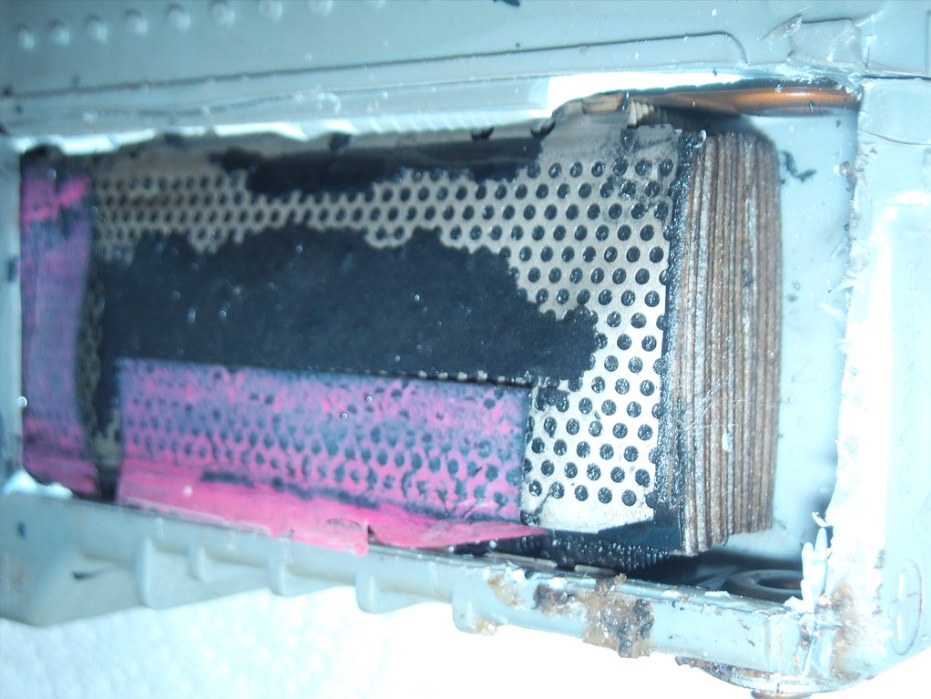
The nickel high-voltage battery is the working heart of older Toyota and Lexus hybrids. A second- and third-generation Prius, an Auris, a Yaris, and many RX and CT models still run on it. It is not charged from a wall socket. It gives current to the motor when you accelerate and takes it back when you brake. The 12 V battery does not hold that store of energy. It only wakes the electronics.
Where the nickel battery came from
Nickel-metal hydride, NiMH for short, appeared in laboratories in the late 1960s. At first it was an ordinary AA cell. Toyota used the same chemistry for the first mass-market hybrid, the 1997 Prius. The reason is simple: nickel lives through thousands of short cycles, works happily when only half charged, and is less fussy than early lithium.
That is why a nickel HV battery is still in most of the used hybrids that come to us in Krakow. Newer Toyotas are moving to lithium. A Prius Prime or a recent Corolla has a different battery — the comparison is in the article NiMH or Li-ion. The rest of this text is about nickel only.
What is inside, without formulas
The pack is a stack of identical cells. Each one has two plates and a liquid between them.
- The nickel plate holds the store that can be given out as current.
- The metal plate soaks up hydrogen the way a sponge soaks up water. The energy sits in that “wet” metal.
- The alkali between the plates burns nothing. It only carries the charge back and forth, and it is hardly used up.
One cell gives about 1.2 volts. A second- and third-generation Prius has 168 of them, about 202 volts together. They are grouped in modules of six — those are the blocks we put on the bench. A Camry, an RX or a Lexus may have a different count. The layout is the same.
The pack sits at the back, under the seat or in the boot, and has its own cooling fan. For nickel, heat is harder on the pack than city traffic is.
What happens on discharge
Discharge is the moment the car takes energy. You press the accelerator, the petrol engine is still quiet or only helping, and the electric motor turns the wheels.
Inside the cell, hydrogen leaves the metal sponge. The nickel plate sends the store down the cables, and the current reaches the motor. The alkali stays where it is. The bars on the dash drop a little. That is the point of the battery: it feeds acceleration.
The cells are in a chain, and the same current runs through all of them. If one is weaker, it empties first and the computer cuts the power of the whole pack. The neighbours could still have worked at that moment.
What happens on charge
Charge is the same path in reverse.
When you lift off or brake, the motor becomes a generator. Current flows into the battery. Hydrogen goes back into the metal sponge, and the nickel plate stores energy again. That is regeneration: energy that would heat the brake pads in an ordinary car comes back into the pack. How to read the needle is in the text on the power indicator.
The second path is the petrol engine. It turns the generator, and part of that energy also goes into the battery. The computer decides how many amps to allow. The driver does not put the car “on charge”.
The bars rise. When they are already high, the computer stops accepting current. From there the car slows on the brakes and, on a long descent, on the engine in position B. That is not a fault. The pack simply has nowhere left to put the charge.
Why it is not charged to the top
Toyota keeps the nickel HV battery in the middle of the scale. On many models that is about 40–80 percent of the real capacity. The exact edges depend on the generation.
At the bottom there is no reserve for an overtake. At the top, extra current no longer becomes stored energy and turns into heat. “Full bars” are the top of the window, not a can filled to the brim. A short trip around the neighbourhood does not run the HV battery down to zero either: the computer tops it up from the engine and brings it back into the window.
The memory effect people mention with old nickel-cadmium cells barely matters to a Toyota nickel HV battery. There is no need to run a Prius “down to zero to wake it up”.
Why a nickel HV battery ages
The pack is built for a long life. It arrives at the workshop tired for reasons that are easy to name.
- Heat. A blocked duct under the rear seat, a dead fan, summer and taxi work. Nickel does not like being driven hard while it is hot. The fan then roars more and more often. How the airflow works is in the text on battery cooling.
- One weak module. It self-discharges faster than its neighbours, its voltage drifts, and the whole chain is limited by it. Fuel use rises, regeneration fades, and a P0A80 code can come on because of a single block.
- A long stand. Even with no miles, nickel slowly loses charge. If the car sits for months, weak modules drift further apart. A flat 12 V battery means the hybrid does not sleep properly, and the stand hurts both batteries.
- Constant heat at the edge of the window. Long descents with an already full pack, and hot climbs, age the plates faster than ordinary city driving.
What happens inside when that starts
Heat, a long stand and a weak module are what the driver notices. Inside the cell they turn into three things: extra heat, less room for charge, and a harder path for the current.
Where the heat comes from
Any current warms the cell a little. It has to push through the plates and the alkali, and some of the energy is lost on the way. A hard acceleration and hard braking warm it more. That is what the fan is for.
A different kind of heat appears at the top of the window. When there is nowhere left to put the hydrogen, the nickel plate starts to give off oxygen. The oxygen reaches the metal and turns back into water. None of that becomes stored energy: almost all of the extra current turns into heat. That is why a pack with full bars warms up on a long descent, and why the computer cuts the charge.
An old cell runs hotter than a new one on the same current. The path inside has got worse, and the current has a harder time getting through.
Why capacity falls
Capacity is how much hydrogen the metal can still take in. In hot alkali that metal slowly corrodes. A corroded patch no longer holds hydrogen, and the tank gets smaller. Heat and a long stand speed the corrosion up.
The corrosion takes a little water out of the alkali. With less liquid, part of the plate drops out of the work. Bits of nickel lose contact with each other: they are still there, but the current never reaches them, and that piece of capacity is gone.
If one module loses charge faster than the rest by itself, the computer stops on that module. The whole pack looks smaller, even though the neighbouring cells could still have worked.
Why resistance rises
Resistance is how hard it is for current to get through inside. A film of corrosion on the metal raises it, and so do a drier alkali and cracks in the sponge: the grains of metal touch each other less well, and the ions in the liquid have less room too.
On the road it shows up like this. Under acceleration the voltage sags and the petrol engine comes in sooner. On charge the voltage jumps and regeneration cuts off before the bars are full. The same cell runs hotter. On the bench a weak module, on the same current, climbs in voltage sooner. That climb is the grown resistance.
What the driver can do
There is no complicated ritual.
- Keep the battery fan able to breathe. Leaves and dust in the duct are a common reason the pack gives up early.
- Do not worry if the bars are lower than usual in the morning. A normal drive, and the computer brings the window back by itself.
- A longer road once a week helps. Not to “discharge it to zero”, but so the system can work calmly both giving current and taking it.
- Do not leave the hybrid for many months with a flat 12 V battery. In winter nickel already accepts charge less willingly — there is a text on winter and summer.
- If the fan roars on a flat road, regeneration has gone, or fuel use has risen, do not wait for the hybrid warning.
What we do in the workshop
At Green Serwis in Krakow we do not “treat” a nickel HV battery with a drill charger. We take the pack off and watch every module under current: which one holds voltage, which one heats, which one has sat down. We replace or balance the weak block and leave the healthy ones. The pack goes back to work without replacing everything at once. If the chemistry is tired all the way round, we say so and offer another way, including a move to lithium.
How the check is done is in the article on hybrid battery diagnostics. Booking is on the hybrid service page.
Fan roaring, bars jumping, fuel use up?
Bring the Prius, Auris or Lexus. We will measure the nickel modules and tell you what is still alive. Green Serwis, Krakow.
Book a visitIn short
A Toyota nickel HV battery charges from braking and from the engine, and discharges when you accelerate. Inside, hydrogen leaves the metal and then returns to it. The alkali only carries the charge. The current itself makes heat, and a full cell makes more of it from oxygen that can no longer be stored. Capacity falls when the metal corrodes and holds less hydrogen. Resistance rises when the path inside clogs, and then the same cell runs hotter and hits the limit sooner. The computer keeps the pack in the middle of the scale so that this happens less.