
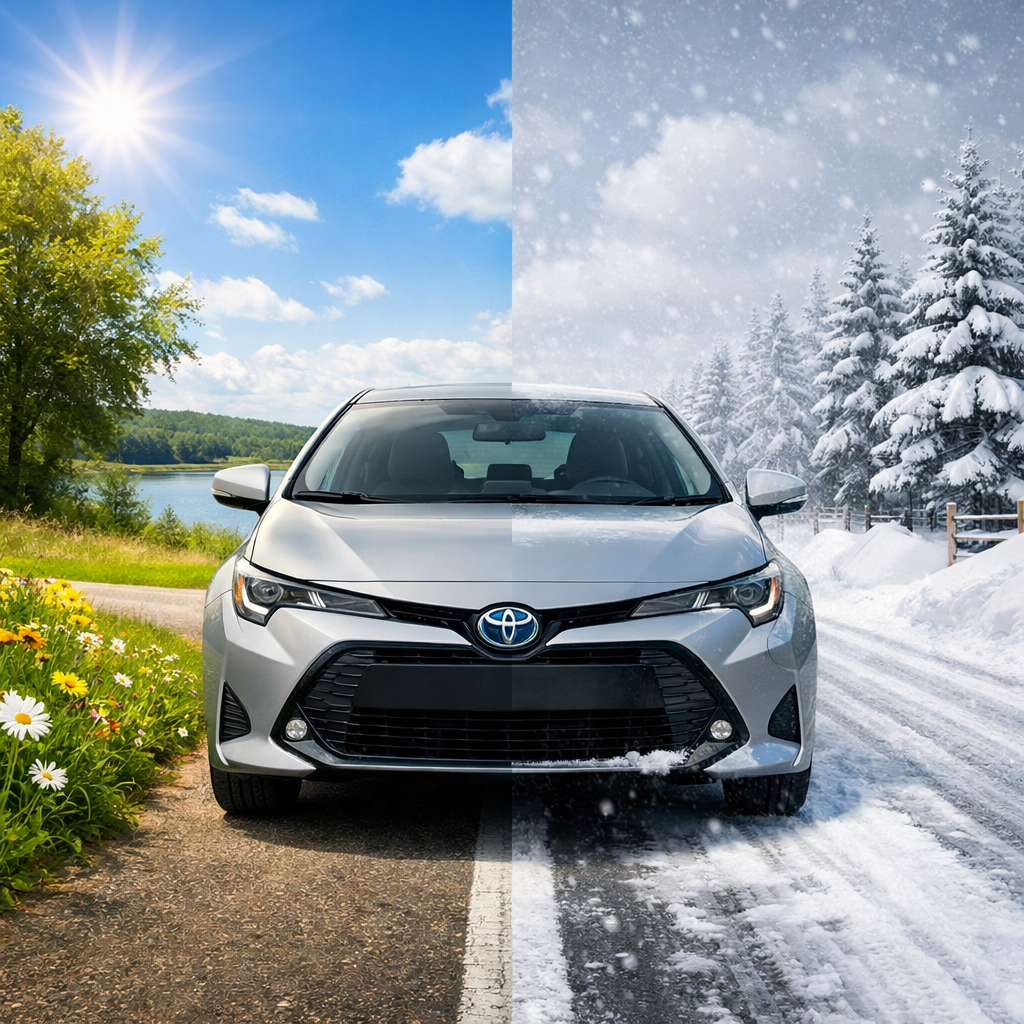
Toyota and Lexus hybrids are designed to cope with different conditions. Even so, extreme temperatures — frost and heat — affect the battery and driving comfort. This article points out what to watch when using a hybrid in winter and summer.
A Toyota and Lexus hybrid in winter
In low temperatures an NiMH battery (older models) and a Li-ion battery (newer ones) have less output. That is normal — the hybrid system limits the load on the battery in frost and uses the petrol engine more often. The result: slightly higher fuel use in winter.
What to do in winter?
- Warm the engine gently — a short moment while stopped, then calm driving; avoid hard acceleration when cold
- Cabin heating — it uses energy; on short trips the battery may charge less — that is not a fault, it is how winter works
- Parking — if you can, keep the car in a garage or under a carport; you limit how far the battery pack cools
- Long stands — if the stand is longer than 2 weeks, start the car and drive about 15–20 km so the battery does not go flat
“In winter a hybrid may run on the petrol engine more often and use more fuel. Once it is warm and in normal driving, everything returns to normal.”
A Toyota and Lexus hybrid in summer
Heat and strong sun mean a higher temperature under the bonnet and around the battery. Toyota and Lexus have an effective battery cooling system (fans, ducts), but it is worth not giving it extra work.
What to do in summer?
- Parking in the shade — wherever you can; you limit heating of the cabin and the battery compartment
- Air conditioning — it draws current from the electrical system; it is normal that on a long drive in the heat the hybrid system works harder
- Battery fans — after a longer drive in the heat, hearing the battery cooling fans is normal; if they are very loud non-stop or a warning lights, it is worth diagnosing the cooling
Rules for the whole year
Whatever the season:
- Regular driving — at least once a week, trips of about 15–20 km; avoid a stand longer than 2 weeks without driving
- Smooth driving — avoid hard acceleration and braking; you spare the battery and the regenerative braking
- Inspection and cleaning — a periodic check of the battery cooling (ducts, filters, fans) before summer and winter makes trouble-free use easier
Summary
A Toyota and Lexus hybrid copes well with both frost and heat, provided it is used and serviced regularly. In winter, accept slightly higher fuel use and a shorter electric range; in summer, look after the cooling and avoid needless heating. If in doubt (for example odd battery behaviour or warning lights), have a diagnostic at a workshop that specialises in hybrids.
Want the hybrid system checked before the season?
At Green Serwis we diagnose the battery and the cooling system. We will check whether your Toyota or Lexus is ready for winter or summer.
Book a visitContact us — we will help keep the hybrid in good shape all year.